Bonnie and Clyde

Summary:A bored small-town girl and a small-time bank robber leave in their wake a string of violent robberies and newspaper headlines that catch the imagination of the Depression-struck Mid-West in this take on the legendary crime spree of these archetypal lovers on the run.
Director:
Arthur PennWriters:
David Newman, Robert BentonStars:
Warren Beatty, Faye Dunaway, Michael J. Pollard
Splendor in the Grass

Summary:It's 1928 in oil rich southeast Kansas. High school seniors Bud Stamper and Deanie Loomis are in love with each other. Bud, the popular football captain, and Deanie, the sensitive soul, are "good" kids who have only gone as far as kissing. Unspoken to each other, they expect to get married to each other one day. But both face pressures within the relationship, Bud who has the urges to go farther despite knowing in his heart that if they do that Deanie will end up with a reputation like his own sister, Ginny Stamper, known as the loose, immoral party girl, and Deanie who will do anything to hold onto Bud regardless of the consequences. They also face pressures from their parents who have their own expectation for their offspring. Bud's overbearing father, Ace Stamper, the local oil baron, does not believe Bud can do wrong and expects him to go to Yale after graduation, which does not fit within Bud's own expectations for himself. And the money and image conscious Mrs. Loomis just wants Deanie to get married as soon as possible to Bud so that Deanie will have a prosperous life in a rich family. When Bud makes a unilateral decision under these pressures, it leads to a path which affects both his and Deanie's future.
Director:
Elia KazanWriter:
William IngeStars:
Natalie Wood, Warren Beatty, Pat Hingle
The Pianist

Summary:A brilliant pianist, a Polish Jew, witnesses the restrictions Germans place on Jews in the Polish capital, from restricted access to the building of the Warsaw ghetto. As his family is rounded up to be shipped off to the German Nazi labor camps, he escapes deportation and eludes capture by living in the ruins of Warsaw.
Director:
Roman PolanskiWriters:
Ronald Harwood (screenplay), Wladyslaw Szpilman(book)Stars:
Adrien Brody, Thomas Kretschmann, Frank Finlay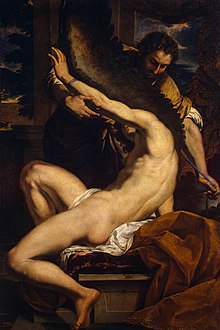
The most familiar literary telling explaining Daedalus' wings is a late one, that of Ovid: in his Metamorphoses (VIII:183-235) Daedalus was shut up in a tower to prevent his knowledge of his Labyrinth from spreading to the public. He could not leave Crete by sea, as the king kept strict watch on all vessels, permitting none to sail without being carefully searched. Since Minos controlled the land and sea routes, Daedalus set to work to fabricate wings for himself and his young son Icarus. He tied feathers together, from smallest to largest so as to form an increasing surface. He secured the feathers at their midpoints with string and at their bases with wax, and gave the whole a gentle curvature like the wings of a bird. When the work was done, the artist, waving his wings, found himself buoyed upward and hung suspended, poising himself on the beaten air. He next equipped his son in the same manner, and taught him how to fly. When both were prepared for flight, Daedalus warned Icarus not to fly too high, because the heat of the sun would melt the wax, nor too low, because the sea foam would soak the feathers.

沒有留言:
張貼留言