First week
Course objective
Student would be able to
-think critically and write precisely about literature and film
-give an English presentation regarding a literary cinema
-write at least 2 film reviews/ responses in English
Doublethink
 -Doublethink is the act of ordinary people simultaneously accepting two mutually contradictory beliefs as correct, often in distinct social contexts. Doublethink is related to, but differs from, hypocrisy and neutrality. Somewhat related but almost the opposite is cognitive dissonance, where contradictory beliefs cause conflict in one's mind. Doublethink is notable due to a lack of cognitive dissonance — thus the person is completely unaware of any conflict or contradiction.
Hypothesis
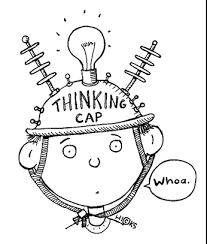 A hypothesis (plural hypotheses) is a proposed explanation for a phenomenon. For a hypothesis to be a scientific hypothesis, the scientific method requires that one can test it. Scientists generally base scientific hypotheses on previous observations that cannot satisfactorily be explained with the available scientific theories. Even though the words "hypothesis" and "theory" are often used synonymous, a scientific hypothesis is not the same as a scientific theory. A working hypothesis is a provisionally accepted hypothesis proposed for further research.
First Class
what is that? what is that for? why should we care?
 -Literature consists of written productions, often restricted to those deemed to have artistic or intellectual value. Literature often uses language differently than ordinary language (see literariness). Literature can be classified according to whether it is fiction or non-fiction and whether it is poetry or prose; it can be further distinguished according to major forms such as the novel, short story or drama; and works are often categorized according to historical periods or their adherence to certain aesthetic features or expectations (genre).
Conflict
 - the general pattern of groups dealing with disparate ideas
Allusion
 Literary
-concerning the writing, study, or content of literature, especially of the kind valued for quality of form.
 Bible
-he Bible is a collection of texts sacred in Judaism and Christianity. It is a collection of scriptures written at different times by different authors in different locations. Jews and Christians consider the books of the Bible to be a product of divine inspiration or an authoritative record of the relationship between God and humans.
 Classics
- is the study of the languages, literature,laws, philosophy, history, art, archaeology and other material culture of Ancient Greece and Ancient Rome; especially during Classical Antiquity (ca. BCE 600 – AD 600). Traditionally, the study of Classical literature (Greek and Roman) was the principal study of the humanities.
