Drama

The term "the drama" refers to "the dramatic branch of literature; the dramatic art".[2] The term "drama" can refer to any kind of dramatic performance, including film, radio play, television play, and closet drama, however, this article is concerned solely with the enactment of a play in a theatre, performed by actors, on a stage, before an audience. Unlike other forms of literature the structure of dramatic texts is directly influenced by thiscollaborative mode of production and a collective form of reception.[3]
Theseus
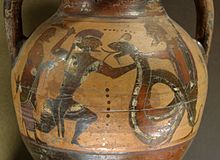
Theseus was a founder-hero, like Perseus, Cadmus, or Heracles (Hercules), all of whom battled and overcame foes that were identified with an archaic religious and social order.[2] As Heracles was the Dorian hero, Theseus was a founding hero, considered by Athenians as their own great reformer: his name comes from the same root as θεσμός ("thesmos"), Greek for "The Gathering". The myths surrounding Theseus—his journeys, exploits, and family—have provided material for fiction throughout the ages.
Demigod


沒有留言:
張貼留言