2016年6月17日 星期五

Approaches to literature week 16

A Midsummer Night's Dream
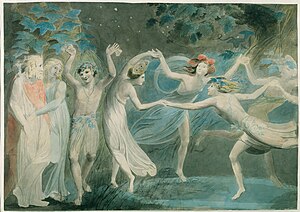
A Midsummer Night's Dream is a comedy written by William Shakespeare sometime between 1590 and 1597. It portrays the events surrounding the marriage of Theseus, the Duke of Athens, to Hippolyta. These include the adventures of four young Athenian lovers and a group of six amateur actors (the mechanicals) who are controlled and manipulated by the fairies who inhabit the forest in which most of the play is set. The play is one of Shakespeare's most popular works for the stage and is widely performed across the world.

Oberon
Oberon (also spelled Auberon) is a king of the fairies in medieval and Renaissance literature. He is best known as a character in William Shakespeare's play A Midsummer Night's Dream, in which he is Consort toTitania, Queen of the Fairies.[1]

Hermia
Image result for hermia midsummer night's dream drawing
Hermia is a fictional character from Shakespeare's play, A Midsummer Night's Dream. She is a girl of Athens. The dialogue makes it clear that she is shorter than Helena. Hermia is caught in a romantic accident where she loves one man, Lysander, but is loved by Demetrius, whose feelings she does not return.

Titania
Titania is a character in William Shakespeare's play A Midsummer Night's Dream. In the play, she is the queen of the fairies. Due to Shakespeare's influence, later fiction has often used the name "Titania" for fairy queen characters.

Approaches to Literature week 17

Catch me if you can
Catch Me If You Can Poster
The true story of Frank Abagnale Jr. who, before his 19th birthday, successfully conned millions of dollars' worth of checks as a Pan Am pilot, doctor, and legal prosecutor.

Director:


Writers:

  (screenplay),  (book) (as Frank W. Abagnale) 

Death of a Salesman
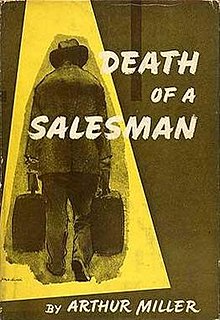
DeathOfASalesman.jpg

Death of a Salesman is a 1949 play written by American playwright Arthur Miller. It was the recipient of the 1949 Pulitzer Prize for Drama and Tony Award for Best Play. The play premiered on Broadway in February 1949, running for 742 performances, and has been revived on Broadway four times,[1] winning three Tony Awards for Best Revival. It is widely considered to be one of the greatest plays of the 20th century.[2]

The Giver
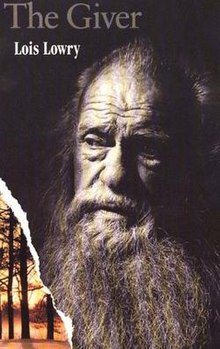
The Giver first edition 1993.jpg
The Giver is a 1993 American young-adult utopian novel by Lois Lowry. It is set in a society which at first appears to be a utopian society but is later revealed to be a dystopian one as the story progresses. The novel follows an 11-year-old boy named Jonas. The society has eliminated pain and strife by converting to "Sameness," a plan that has also eradicated emotional depth from their lives. Jonas is selected to inherit the position of Receiver of Memory, the person who stores all the past memories of the time before Sameness, as there may be times where one must draw upon the wisdom gained from history to aid the community's decision making. Jonas struggles with concepts of all the new emotions and things introduced to him: whether they are inherently good, evil, or in between, and whether it is even possible to have one without the other. The Community lacks any color, memory, climate and terrain, all in effort to preserve structure, order, and a true sense of equality beyond personal individuality.[1]

How and why we read

Approaches to literature week 15

Drama
The term "the drama" refers to "the dramatic branch of literature; the dramatic art".[2] The term "drama" can refer to any kind of dramatic performance, including film, radio play, television play, and closet drama, however, this article is concerned solely with the enactment of a play in a theatre, performed by actors, on a stage, before an audience. Unlike other forms of literature the structure of dramatic texts is directly influenced by thiscollaborative mode of production and a collective form of reception.[3]

Theseus
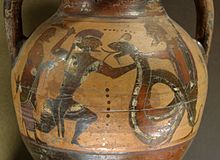
Euboean amphora, c.550 BCE, depicting the fight between Cadmus and a dragon
Theseus was a founder-hero, like Perseus, Cadmus, or Heracles (Hercules), all of whom battled and overcame foes that were identified with an archaic religious and social order.[2] As Heracles was the Dorian hero, Theseus was a founding hero, considered by Athenians as their own great reformer: his name comes from the same root as θεσμός ("thesmos"), Greek for "The Gathering". The myths surrounding Theseus—his journeys, exploits, and family—have provided material for fiction throughout the ages.

Demigod

Image result for demigod
A demigod or demi-god is a divine or supernatural being in classical mythology. The term has been used in various ways at different times and can refer to a figure who has attained divine status after death, a minor deity, or a mortal who is the offspring of a god and a human being.
Aegean sea
Image result for aegean sea
The Aegean Sea (/ᵻˈdʒiːən/; Greek: Αιγαίο Πέλαγος [eˈʝeo ˈpelaɣos]; Turkish: Ege Denizi Turkish pronunciation: [e̞ɟe̞ de̞n̪iz̪i]) is an elongated embayment of the Mediterranean Sea located between the Greek andAnatolian peninsulas, i.e., between the mainlands of Greece and Turkey. In the north, it is connected to the Marmara Sea and Black Sea by the Dardanelles and Bosporus. The Aegean Islands are within the sea and some bound it on its southern periphery, including Crete and Rhodes.

Approaches to Literature week 14

Dover Beach
Image result for Dover beach poem
"Dover Beach" is a lyric poem by the English poet Matthew Arnold.[1] It was first published in 1867 in the collection New Poems, but surviving notes indicate its composition may have begun as early as 1849. The most likely date is 1851.[2]
The title, locale and subject of the poem's descriptive opening lines is the shore of the English ferry port of Dover, Kent, facing Calais, France, at the Strait of Dover, the narrowest part (21 miles) of the English Channel, where Arnold honeymooned in 1851.[2]

Sophocel
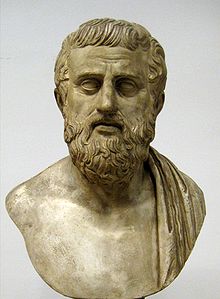
Sophocles pushkin.jpg
Sophocles (/ˈsɒfəkliːz/;[1] Greek: Σοφοκλῆς, Sophoklēs, Ancient Greek: [so.pʰo.klɛ̂ːs]; c. 497/6 – winter 406/5 BC)[2] is one of three ancient Greek tragedians whose plays have survived. His first plays were written later than those of Aeschylus, and earlier than or contemporary with those of Euripides. Sophocles wrote 120 plays during the course of his life, but only seven have survived in a complete form: Ajax, Antigone, The Women of Trachis, Oedipus the King, Electra, Philoctetes and Oedipus at Colonus.[3] For almost 50 years, Sophocles was the most celebrated playwright in the dramatic competitions of the city-state of Athens that took place during the religious festivals of the Lenaea and the Dionysia. He competed in 30 competitions, won 18, and was never judged lower than second place. Aeschylus won 14 competitions, and was sometimes defeated by Sophocles, while Euripides won 5 competitions.[4]

Horace
Quintus Horatius Flaccus.jpg
Quintus Horatius Flaccus (December 8, 65 BC – November 27, 8 BC), known in the English-speaking world as Horace (/ˈhɒrəs/ or /ˈhɔːrəs/), was the leading Roman lyric poet during the time of Augustus (also known as Octavian). The rhetorician Quintillian regarded his Odes as just about the only Latin lyrics worth reading: "He can be lofty sometimes, yet he is also full of charm and grace, versatile in his figures, and felicitously daring in his choice of words."[nb 1]